As of 2019, console gaming commands a 26% global share in revenue compared to other platforms in the industry[1]. Console gaming has been on a steady decline since 2015 it is possible there will be a future where consoles are phased out completely in favour of other technology.
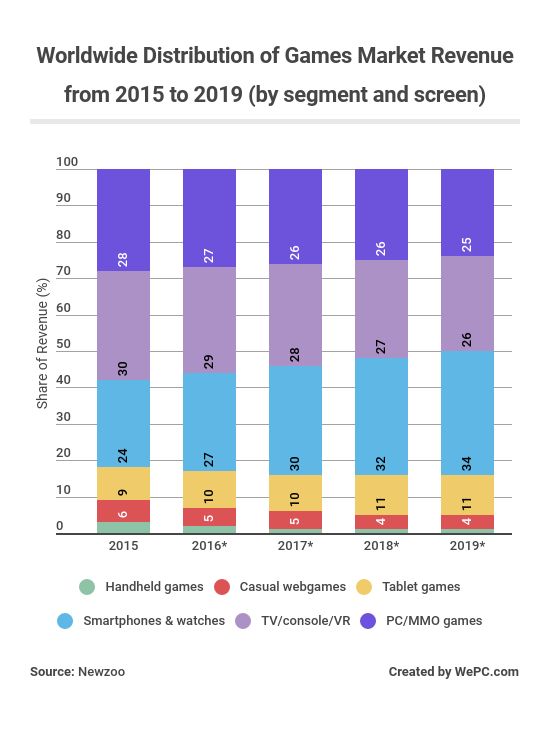
Within the next six years console gaming will still be strong, however the groundwork of future technologies is being laid today that may take over console gaming. To explore this we will look into the impact that the following technologies will have on console gaming: Streaming/subscription services, hardware advancements, and graphical advancements.
Streaming and Subscriptions

In June 2019 Google unveiled their Stadia service, a subscription that allows users to stream games to their Google devices (Chrome, Pixel, etc.)[2]. Users will essentially remote into Google’s cloud systems and it will stream audio and video back to the user. This technology is cloud-gaming. It began in 2010 when a company called OnLive provided their solution[3], doing the same thing Google is attempting now. However, the industry and its consumers were not quite ready for it eventually shutting down in 2015. This year, cloud-gaming is coming back big with Google Stadia since internet infrastructure has improved since the last 9 years. Stadia requires a download speed of atleast 10 Mbps for a 720p/60fps experience and can scale up to 4k/60fps depending on the user’s bandwidth.
Now may be the right time for this kind of technology to make a comeback. Toted as ‘The Netflix for games’, Stadia and other services like it are normative in society and it may push into mainstream acceptance. Traditionally, consoles are expensive $300 for a Playstation 4, $250 for a Nintendo Switch. With a subscription based service like Stadia it will be easier for an average consumer to try out gaming for less than $150 and a fee per month, possibly making it the future of consoles.
Hardware and Graphics
Consoles are essentially mini-PCs, same architecture and components, different operating system. As such, future iterations of console products will see new upgrades that are also available to PC builders. Although consoles are behind in power compared to the average PC they are still a large market share and as such game developers had to limit graphical fidelity so that their games would also support consoles. Within the next 6 years we will see at least one, if not two, hardware cycles of consoles each with their own upgrades.
With an upgrade to components in consoles we’ll see more features being pushed by developers within the next generation. 8k resolution, higher framerates, faster loading times, etc[5]. Ultimately, these features will keep console gaming as the most powerful option for the average consumer and gives traditional consoles a future in the short-term.
The Next Big Graphical Advancement
As HDR (High Dynamic Range) is being pushed today as the biggest graphical upgrade the industry is already looking towards the next big thing: Real Time Ray Tracing.
:format(webp)/cdn.vox-cdn.com/uploads/chorus_image/image/63983186/Reflections_02_2560x1400.0.jpeg)
Essentially, ray tracing refers to how a ray of light illuminates objects that it hit and how that ray of light travelled from its source[7]. Ray tracing as a technique has been used in films and CGI to accurately depict light. Using this technique in real-time hasn’t been possible until Nvidia launched its RTX series of video cards in 2018 that support real-time ray tracing[8].
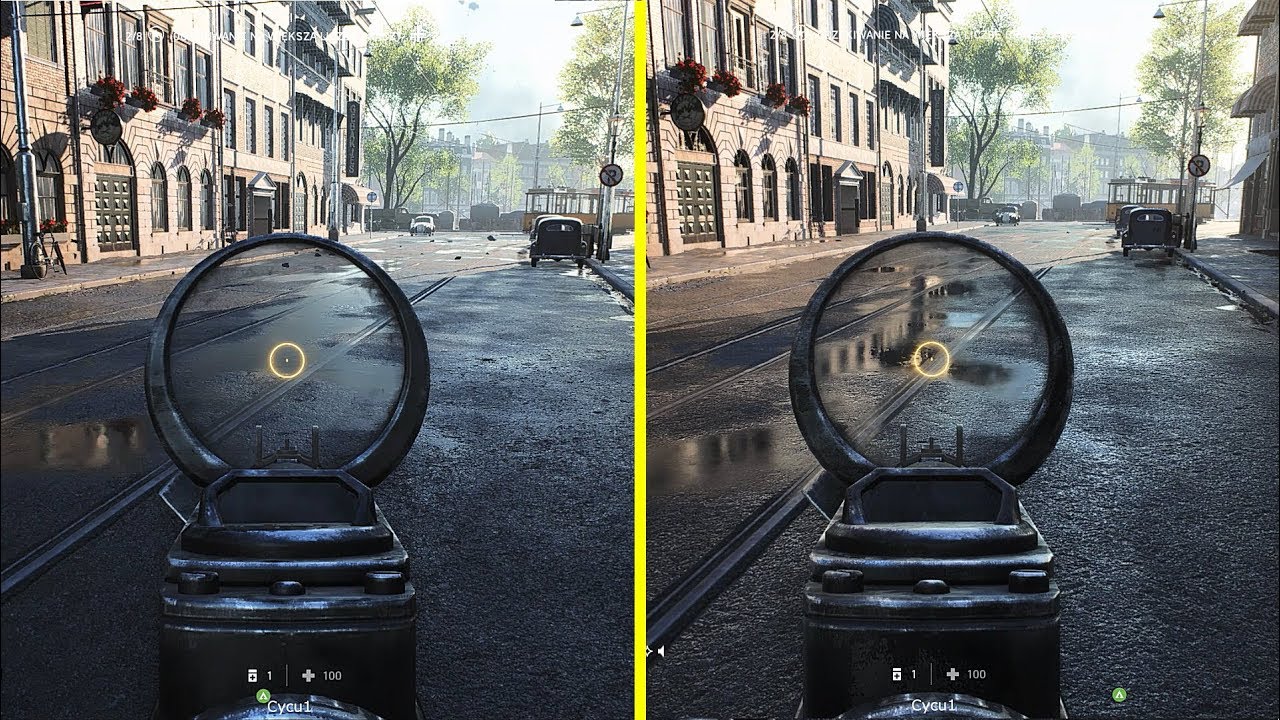
Still this technique is incredibly taxing on hardware requiring users and developers to make large compromises in order for real-time ray tracing to run in games. In the example above of Battlefield V, the implementation of real-time ray tracing is not extremely impressive for the performance hit that it occurs.
With the next generation of consoles, Microsoft’s Project Scarlett and Sony’s Playstation 5, supporting real-time ray tracing[10] we will see developers improve implementation of the technique into games bringing a higher level of immersion and experience to players.
Consoles Have a Future (in the short-term)
Currently the market is still excited for the next-generation of consoles and the improvements that it will bring, the next six years will be an exciting time for traditional consoles. However, in 10 years or 15 years as internet and streaming technologies improve we may see services like Google Stadia take over what we know as consoles today.
References
[1]. 2019 Video Game Industry Statistics, Trends & Data. (2019, June). Retrieved from https://www.wepc.com/news/video-game-statistics/#console-gaming
[2]. Knapp, M. (2019, June). Stadia: everything you need to know about Google’s game-streaming service. Retrieved from https://www.techradar.com/news/stadia-everything-you-need-to-know-about-googles-game-streaming-service
[3]. OnLive (2015, April). Retrieved from http://onlive.com/
[4]. Xbox Project Scarlett – E3 2019 – Reveal Trailer. (2019, June). Retrieved from https://www.youtube.com/watch?v=-ktN4bycj9s
[5]. Andronico, M. (2019, June). Xbox Project Scarlett: Specs, Features, Price, Release Date and More. Retrieved from https://www.tomsguide.com/us/next-xbox-release-date-rumors,news-27484.html
[6]. Sarkar, S. (2019, June). Real-time ray tracing, and what it means for video games, explained. Retrieved from https://www.polygon.com/e3/2019/6/10/18410733/ray-tracing-xbox-scarlett-ps5-amd-navi-nvidia-rtx
[7]. Caulfield, B. (2018, March). What’s the Difference Between Ray Tracing and Rasterization? Retrieved from https://blogs.nvidia.com/blog/2018/03/19/whats-difference-between-ray-tracing-rasterization/
[8]. What is GeForce RTX? (2018). Retrieved from https://www.nvidia.com/en-us/geforce/20-series/rtx/
[9]. Battlefield V – Ray Tracing On vs Off / Frame Rate Test – Rotterdam Map Graphics Comparison. (2018, November). Retrieved from https://www.youtube.com/watch?v=mRH0ug7GOlc
[10]. Hruska, J. (2019, April). Sony PlayStation 5: Ray Tracing, SSD, 8-Core AMD Ryzen 3. Retrieved from https://www.extremetech.com/gaming/289616-sony-playstation-5-ray-tracing-ssd-8-core-amd-ryzen-3
 The Future of Technology in Gaming in 2025